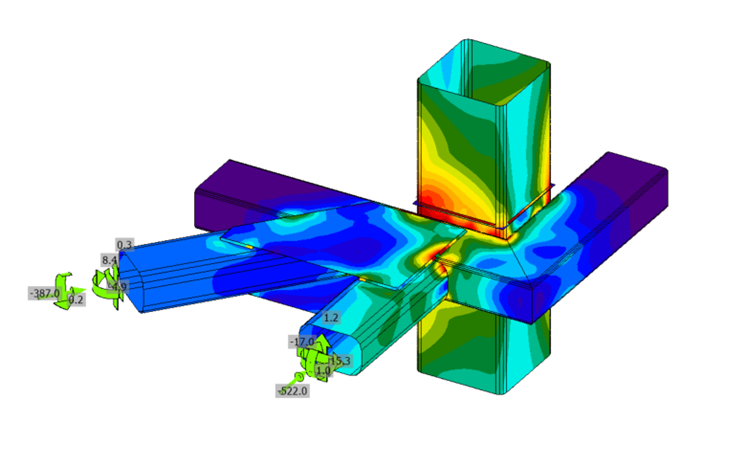
At Tottenham Hale, Amrose Associates were appointed to design a steel restraint system to tie a tower crane installed within the concrete core of a high-rise development.
As the core structure increased in height, the crane climbed with it but beyond a certain point, base stability alone is no longer sufficient. Additional lateral restraint was needed to control movement caused by wind and operational loads.
The Challenge
The brief was to design a restraint system that could:
- Clamp securely onto the crane mast
- Transfer horizontal loads safely into the concrete core
- Accommodate tolerances in crane position and core geometry
- Be practical to fabricate, lift and install within site constraints
The crane was located within an asymmetrical concrete core, adding complexity to load transfer and coordination with the permanent works design.
In addition, strict limits on crane deflection meant that the combined movement of both the restraint frame and the concrete core had to remain within allowable tolerances. The system also needed to manage high local bearing pressures at the interface with the core.
The Solution
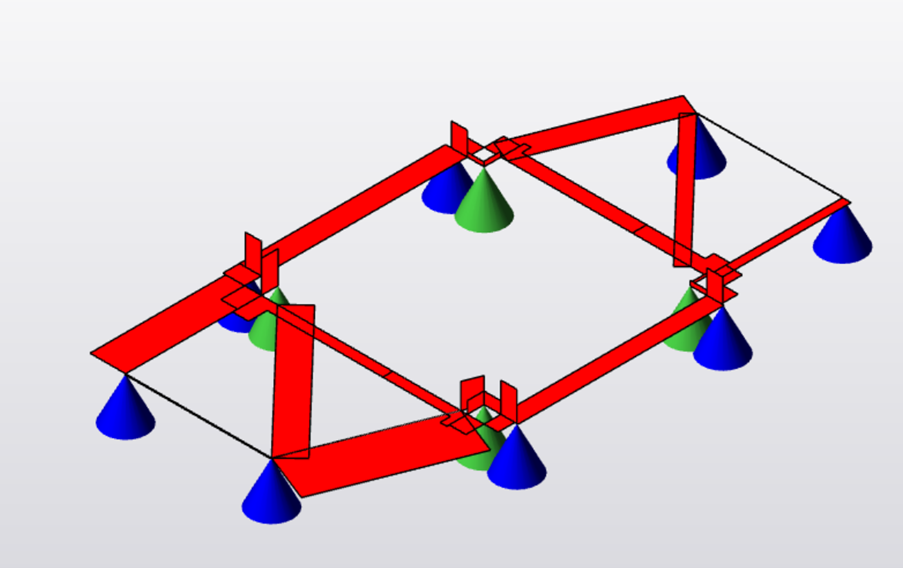
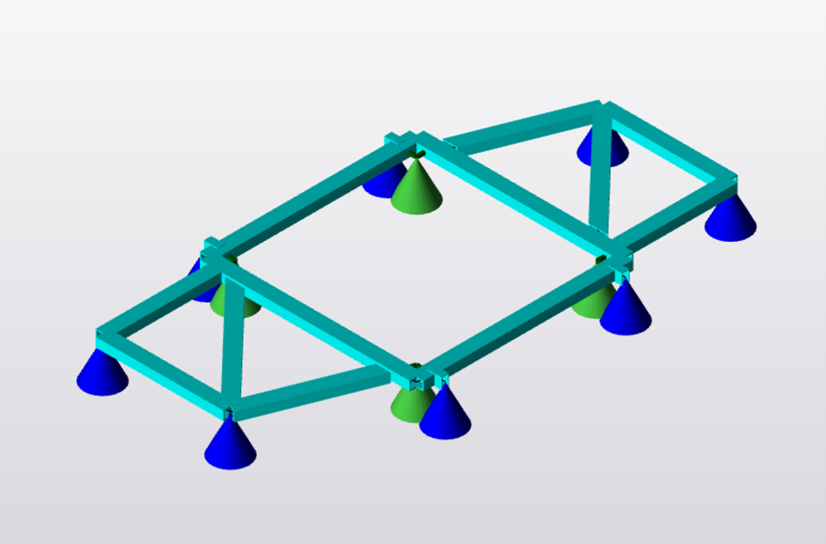
Amrose designed a static steel restraint frame that clamps onto the crane mast and bears against the concrete core using adjustable bearing plates.
This provides a direct load path, allowing horizontal forces to transfer safely into the structure and stabilising the crane as it climbs.
Key features of the solution included:
- RHS steel frame construction for efficient performance under combined bending and torsion
- Gusset plated connections to provide strength and stiffness
- Bolted splice connections for practical on-site assembly
- Adjustable bearing plates with threaded rods to accommodate installation tolerances
- Modular design with splice locations sized to pass through the slipform opening
Although the core geometry was asymmetrical, the frame was designed as two identical halves, improving fabrication efficiency and reducing the risk of errors during manufacture and installation.
Given the complexity of loading, the design was developed using 3D finite element analysis, enabling accurate modelling of load interaction, connection behaviour and deflection, while allowing rapid refinement of the design.
Close coordination with the permanent works designer ensured that deflection limits and bearing pressures were agreed early. A preliminary assessment of forces, deflections and contact stresses was carried out and shared, allowing key parameters to be confirmed before progressing detailed design.
Amrose also produced the fabrication drawings in-house, maintaining full alignment between design intent and delivery and ensuring a smooth transition from design through to installation.
The Outcome
The result was a practical, efficient and reliable restraint system that met both structural and site requirements.
By combining detailed engineering analysis with a clear understanding of fabrication and installation constraints, the solution:
- Delivered safe and effective lateral restraint for the tower crane
- Maintained compliance with strict deflection limits
- Reduced fabrication complexity and installation risk
- Avoided delays through early coordination and in-house delivery
This project demonstrates Amrose’s ability to deliver technically robust, buildable solutions for complex temporary works challenges. If you’d like to discuss tower crane restraint, temporary works or complex structural challenges, Ask Amrose.
